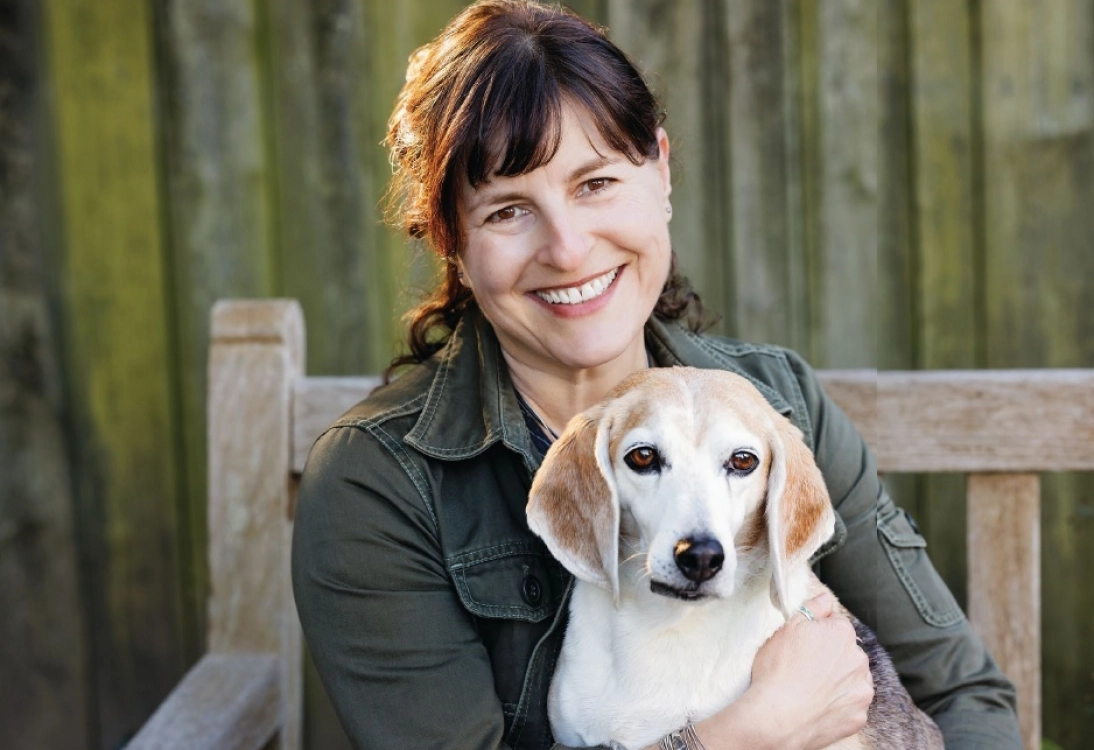
Full disclosure. I’ve known Melanie D.G. Kaplan for nearly 20 years. Like me, she’s a third-generation Washingtonian and, also like me, she’s a rabid dog enthusiast.
Kaplan’s writing career has been rich and varied (she’s a master storyteller). The science and lifestyle writer has also committed to something other dog enthusiasts don’t: taking her companions along for the literary ride. She has written about countless adventures with her canine friends, and each story is a little revelation about the bonds between humans and dogs.
Her new book, Lab Dog (2025, Seal Press), explores the life of her former research lab beagle, Hammy. Here, Kaplan discusses what she learned about 40 research labs and their use of dogs while investigating her book.
Your book begins with the adoption of a former research-lab beagle named Hammy and then expands into an investigation of animal research. At what moment did you realize Hammy’s story would lead you into this complex, wider world of science, ethics and policy? It was years after I adopted Hammy that I realized I needed to write about him in depth. I approached the topic with a somewhat fantastical mindset—that I’d meet the people personally involved in his breeding, experimentation and lab care. But then I began to understand just how polarizing this topic is and how reluctant most animal researchers would be to talk to a journalist, especially one writing a book about her former lab beagle.
One of the central tensions you explore is the dual role of dogs like Hammy, as beloved companions and as research subjects. How did you navigate that tension in your reporting, and how do you hope readers will grapple with it after reading the book? There was no way to remain totally neutral on this topic because I was always thinking of Hammy. Whether his time in a lab was beneficial to human health, which I doubt, I couldn’t bear the thought of him being in captivity.
But as a journalist, I tried to keep an open mind, to understand various perspectives and to share them fairly. I hope the book informs people. Then it’s up to the readers—as voters, consumers and patients—to take the next step and do their own grappling. These are difficult questions. We can’t begin to answer them until they’re in the light.
You spent time visiting labs, interviewing researchers, activists and ethicists. Were there any conversations or sites that changed your own mind about the use of animals in research? I was a little surprised—and maybe shouldn’t have been—by the hostility and distrust between the two camps. Visiting animal labs and seeing living beings in cages had a lasting impact on me in a surprising way. It’s one thing to read about animal research and quite another to look at another mammal with eyes, ears, noses, fears and personalities, just like we do, and to know this is their life.
You chart promising developments in nonanimal testing and alternatives. What do you see as the most realistic path for reducing the use of dogs or animals in biomedical or product testing—and what are the biggest obstacles to getting there? Experimentation on chimps ended in 2015, and some people suggest that dogs may be next. I’ve heard dogs called the ‘gateway animal’ in that if we stop experimenting on them, other species will follow. We share our homes and lives with dogs, and people care about them more than rats, mice or zebrafish, which are used much more frequently for research.
In the meantime, there are many ways to reduce animal use. We can commit to training young scientists how to conduct biomedical research differently. The next generation needs to be comfortable with non-animal methods, utilizing combinations of computer modeling, AI, organ chips and human data, rather than relying so heavily on what the industry considers the gold standard—animal studies.
The government funding for the development of these new methods is a drop in the bucket compared to the billions going toward animal research—taxpayer-funded, by the way.
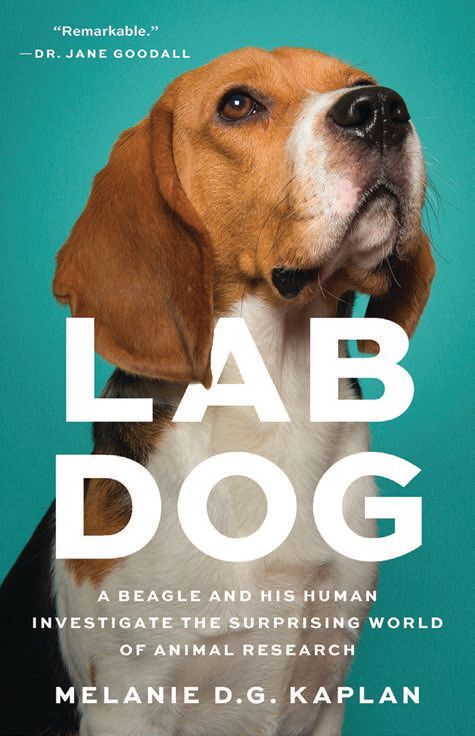
Melanie D.G. Kaplan's new book, Lab Dog.
Your favorite place to walk Hammy in the DC area? Roosevelt Island. Although we also loved the National Arboretum, which has a Mt. Hamilton!
What’s the most surprising thing Hammy taught you about resilience? The restorative power of a treat and a nap.
If Hammy could talk, what would be the first thing he’d say about his life? Still hungry.