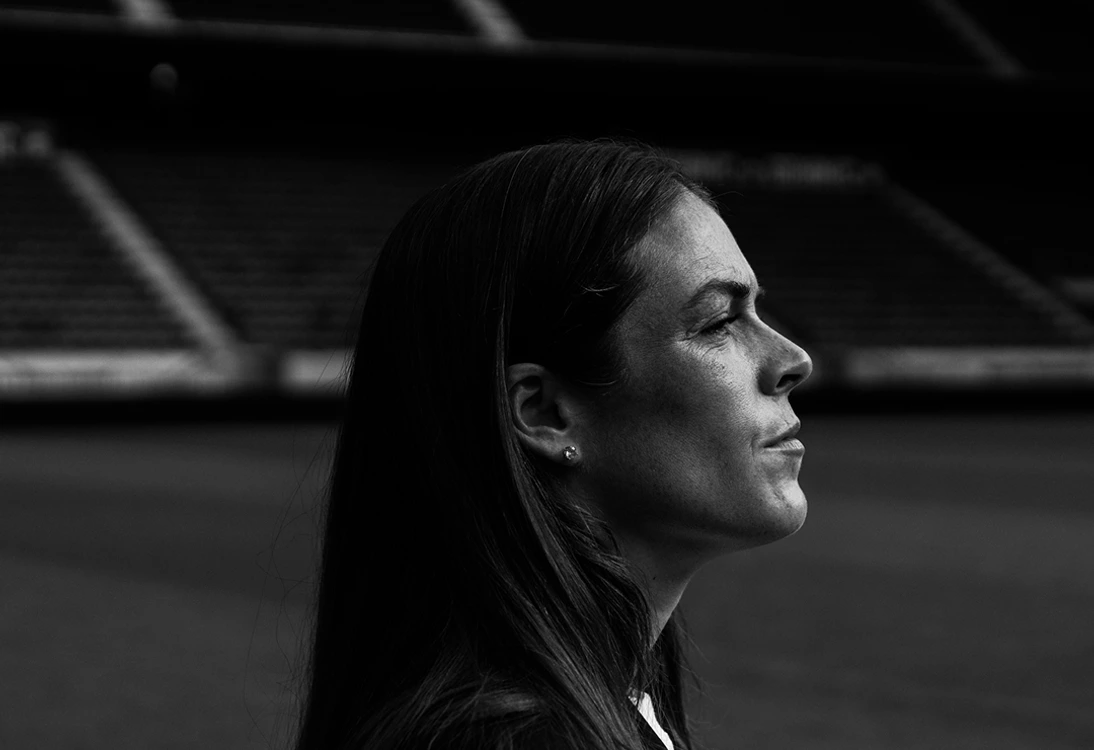
For nearly two decades, Kelley O’Hara lived within the relentless rhythm of elite athletics: training schedules, recovery protocols, championship runs and the pressure of constantly performing at the highest level. The former U.S. Women’s National Team star built a career defined by discipline and resilience, helping shape one of the most dominant eras in women’s soccer history.
Now, as the global spotlight once again turns toward the sport with the World Cup headed to New York, O’Hara finds herself entering a different chapter rooted in possibility.
“The core of family is love,” she says simply.
That perspective anchors her partnership with RMA of New York and its ongoing conversation around fertility awareness, reproductive wellness and modern family-building. Through RMA’s new campaign, O’Hara opens up about a topic that has historically remained absent from conversations in professional sports—what happens after the game.
The Timeline No One Talks About
For elite athletes, life is often mapped in seasons, contracts and Olympic cycles. Physical performance becomes the priority for years, sometimes decades, leaving little room to think about what comes next.
“I’ve always wanted a family,” O’Hara shares. “But as time goes on, those chances dwindle.”
It is a reality many women face, though rarely discussed openly within professional athletics. “It wasn’t something that we as players talked about,” she says.
That silence is beginning to shift. Across sports and entertainment, more women are speaking candidly about fertility preservation, IVF and reproductive planning—not as a reaction to fear, but as part of a broader commitment to long-term wellness and autonomy.
For O’Hara, education became a key part of that evolution. “As the world evolves, the ideas around egg freezing and IVF—it gives you options,” she says. “And to me, options are one of the most empowering things you can have.”
Redefining Strength
The realities of retirement can be deeply disorienting for athletes whose identities have long been tied to performance. “The reality of being a pro athlete is you go from doing something you love and feel so passionate about,” O’Hara says, “to then turn the page and enter this new chapter.”
For many women, that next chapter includes difficult questions around timing, partnership and fertility—topics that have too often been treated as private burdens instead of essential health conversations.
“My partner and I want to try to have a family, [but] there is a pressure around the time as a female,” O’Hara explains.
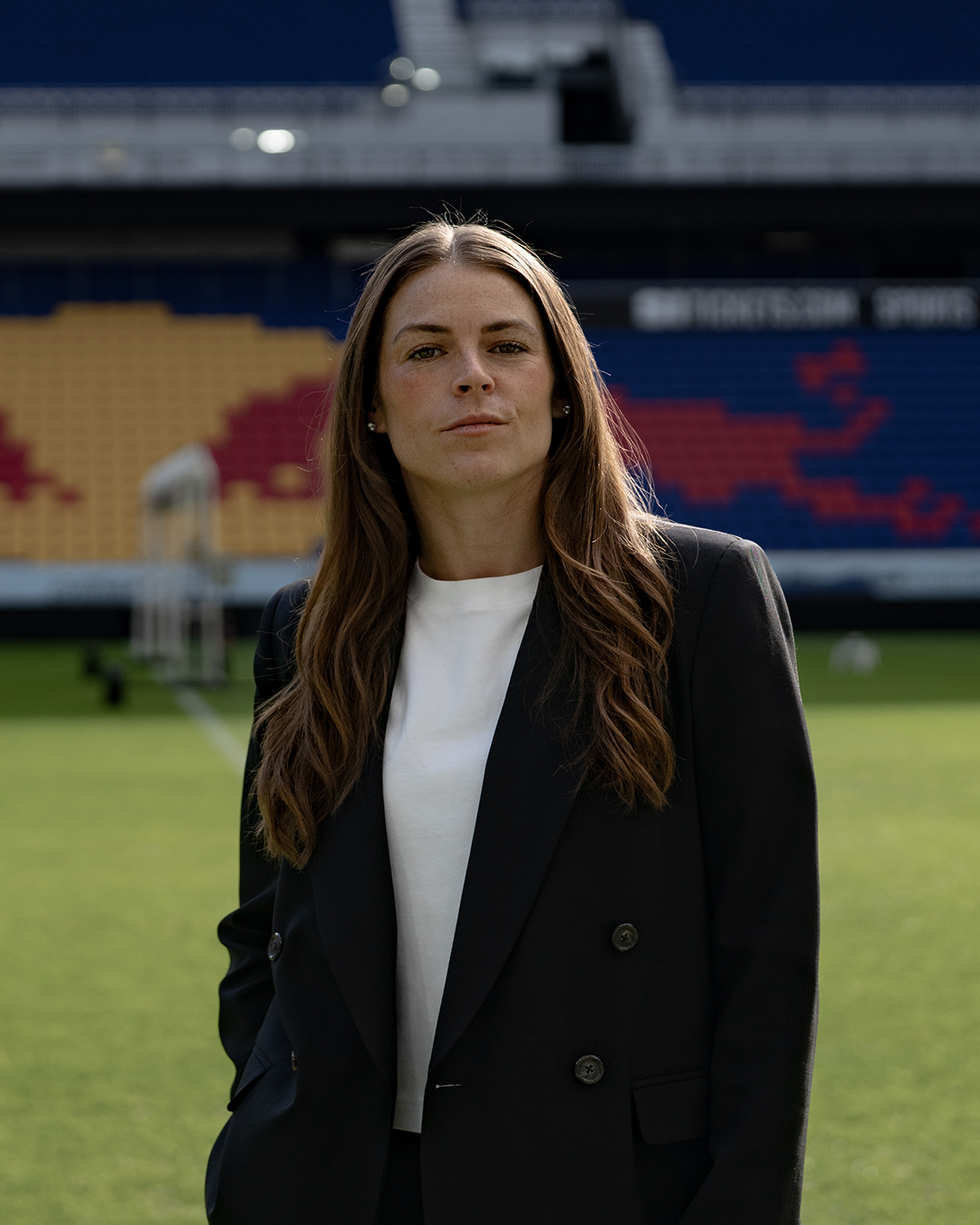
At RMA of New York, those conversations are approached through both science and support. As one of the country’s leading fertility centers and a division within the Mount Sinai Health System, the practice has spent more than two decades advancing reproductive medicine while expanding access to inclusive, patient-centered care.
That inclusivity matters—particularly for LGBTQIA+ individuals and couples navigating family-building in systems that historically lacked representation. By partnering with voices like O’Hara’s, the campaign reflects a broader cultural shift toward visibility and affirmation across all paths to parenthood.
Beyond Fertility, Toward Agency
At its core, the conversation moves beyond fertility treatment into agency: the ability to make informed decisions about one’s future without shame or stigma attached.
“I think motherhood is one of the most beautiful miracles of life,” O’Hara says. “Start to have these conversations, make it more mainstream and take control of your life, your future.”
That message resonates far beyond athletics. Whether someone is pursuing egg freezing, IVF, surrogacy or simply exploring their options earlier than previous generations may have considered, the growing emphasis on fertility education represents a larger shift in how reproductive health is understood.
In many ways, it mirrors the evolution of women’s sports itself. Conversations once considered niche or uncomfortable are now entering the mainstream with greater openness and honesty.
The Leap Into What’s Next
Even after years competing on the world’s biggest stages, O’Hara admits that certainty still feels elusive. “I don’t think I’ve ever felt, ‘Oh, I’m 100% ready for this,’” she says. “Because you don’t know what’s on the other side, but you’ve got to take the leap to find out.”
For O’Hara, the future is still unfolding. But the conversation she is helping create—one centered on education, inclusivity and empowerment—is already having an impact beyond the field.
And perhaps that is the point. Beyond the championships, beyond the game, beyond the next phase of life, there remains something deeply universal at the center of it all: the hope of building a future rooted in love.
To learn more about fertility preservation, IVF and modern family-building—or to explore the stories featured in Family Portraits—visit RMA of New York.