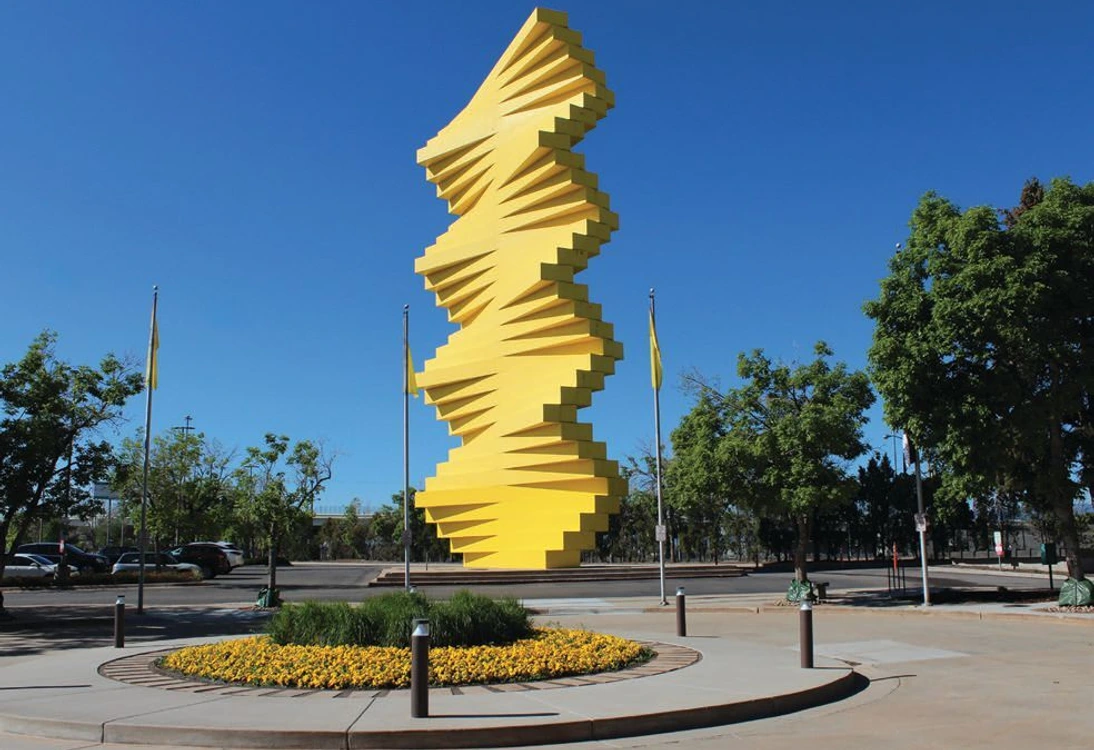
As you speed down I-25 south of Denver, a towering stack of canary-yellow bars twisting into Colorado’s blue sky seems to change shape. Herbert Bayer’s original “Articulated Wall” sculpture was built for the 1968 Olympics in Mexico City, and today, an 85-foot-tall iteration, commissioned in 1985, anchors the Denver Design District’s (denverdesign.com) 75- acre campus. The district recently unveiled a new vision and visual brand identity, drawing inspiration from modernist principles—and Bayer’s legacy.
The Denver Design District has long been a premier luxury home decor destination for trade professionals— architects, builders, interior designers and manufacturers—but along with this new identity, the district is evolving into a place where everyone is welcome. The goal was to create a more inclusive, vibrant and accessible destination that brings together pros, consumers, design enthusiasts and creatives alike. In addition to showrooms filled with luxury brands, the district now hosts pop-ups, art installations and culinary concepts. You’ll find Mother Other, a cocktail bar and eatery from the team behind Easy Vegan, and Rebel Bread, a cafe and teaching kitchen that hosts baking workshops. On Tuesdays last winter, 50 growers, makers and culinary artisans converged at the district for the A Tavola Winter Market.
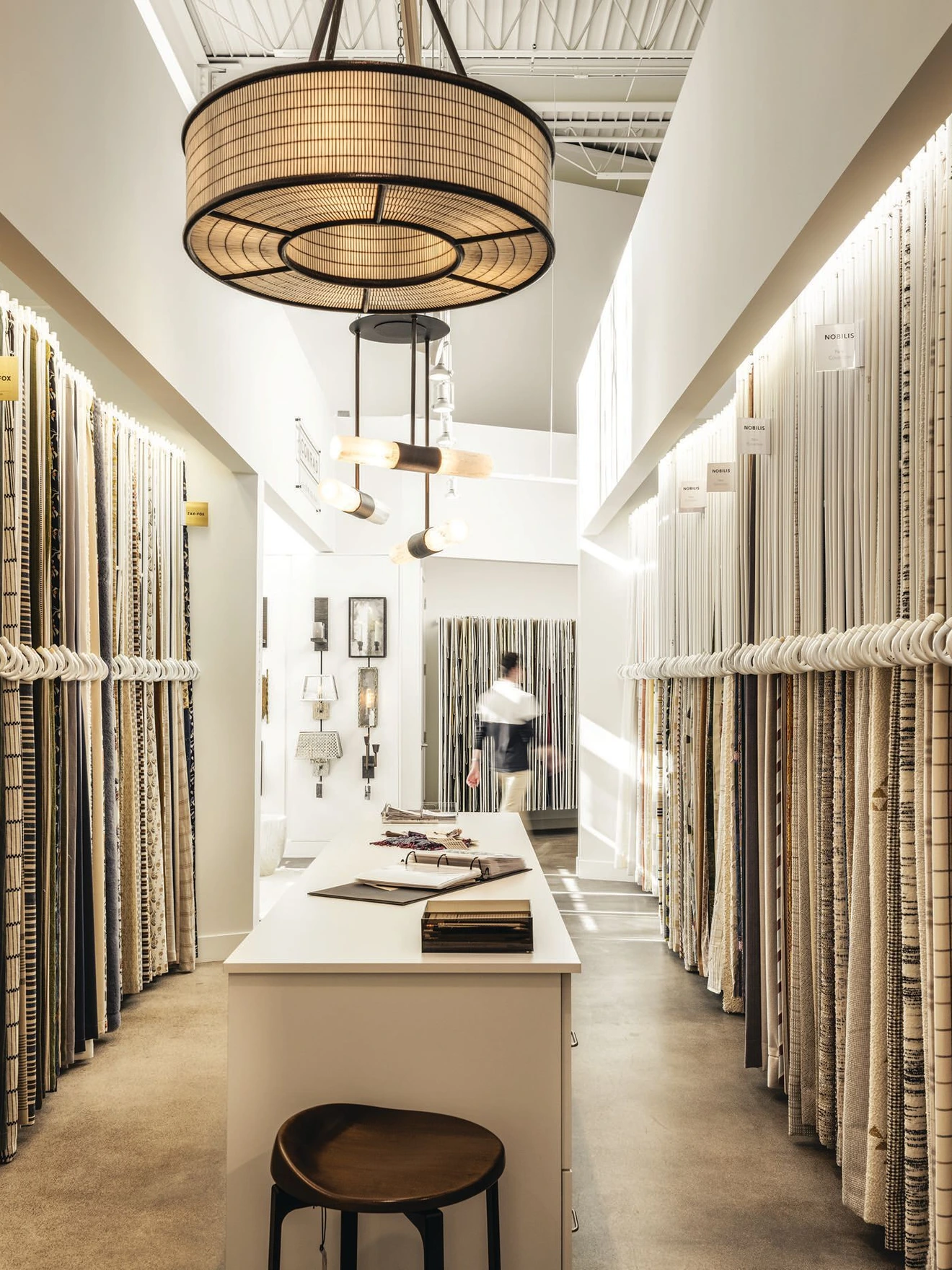
Kneedler Fauchere, known for its luxury textile collections, is one of many showrooms at the Denver Design District.
PHOTO BY PARRISH RUIZ DE VELASCO OF PARRCH
Within its 400,000 square feet of space, the district recently added 11 new showrooms offering curated collections, including wallcoverings from Phillip Jeffries, sculptural lighting and furniture from Verellen, cabinetry from Brazil’s Dell Anno, one-of-a-kind furnishings from Rogala Design and custom cabinetry from Tharp. The district is open to the public, and many showrooms sell directly to consumers. If the multitude of materials on display feels like overchoice, visitors can meet with an on-site interior designer for an hour-long discovery session through the district’s Designer Portfolio Program.
The Denver Design District collaborated with Denver-based creative studio Wunder Werkz on its new brand identity, including a Bauhaus-inspired logo, a custom sans-serif typeface and a palette inspired by Josef Albers’ modernist color studies. “This transformation goes far beyond a visual update,” says Dan Cohen, CEO of the Denver Design District. “It signals the direction of Denver’s design future and underscores the strength and character of the uniquely curated, continually growing tenant roster that defines this location.”