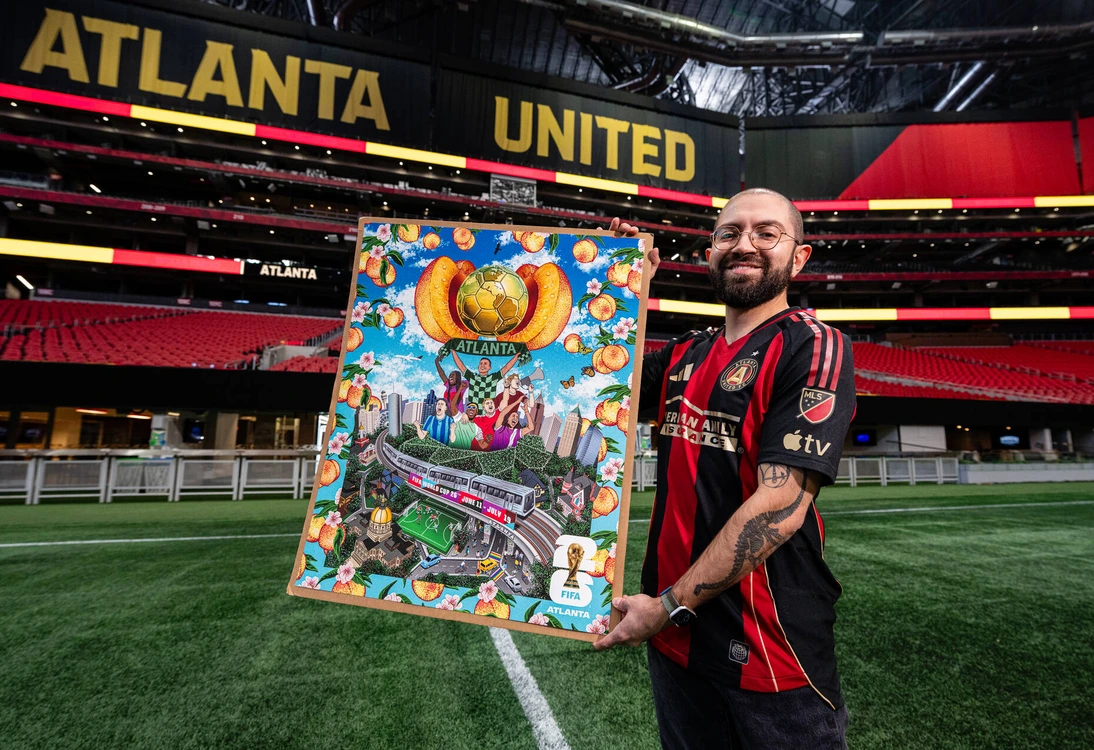
Atlanta’s moment on the global stage is arriving. This summer, the city is hosting eight FIFA World Cup™ (fifa.com) matches, welcoming fans for one of the biggest sporting events in history. But for Atlanta native and SCAD alum Jose Hadathy, it’s more than a tournament—it’s a reflection of identity and community.
Hadathy, the creative design manager for Atlanta United FC (atlutd.com), was selected to create the Atlanta Host City poster. A vibrant love letter to his city, it comes alive with MARTA trains, lush greenery, historic landmarks (including Martin Luther King Jr.’s home, The Wren’s Nest and the Hammond House Museum) and, of course, the iconic peach symbol.
Hadathy’s favorite easter eggs? The soccer field (inspired by the Soccer in the Streets charity) and the Krog Street Tunnel (a nod to Atlanta’s street art culture), with his initials subtly included in the graffiti. The design not only showcases the love for the sport but also teaches a global audience about the city’s history.
Born in Quito, Ecuador, Hadathy moved to Atlanta at a young age and gathered influences throughout the years. While studying at SCAD Atlanta, he explored the city almost entirely by bicycle, which gave him the freedom to explore and also taught him the value of accessible transportation. He’s also lived in Westview for a few years, appreciating the city’s historic architecture.
“What has always inspired me is how close nature remains within the city,” he says. “You can be surrounded by skyscrapers, and just a block away, it feels like you are in a quiet wooded neighborhood.”
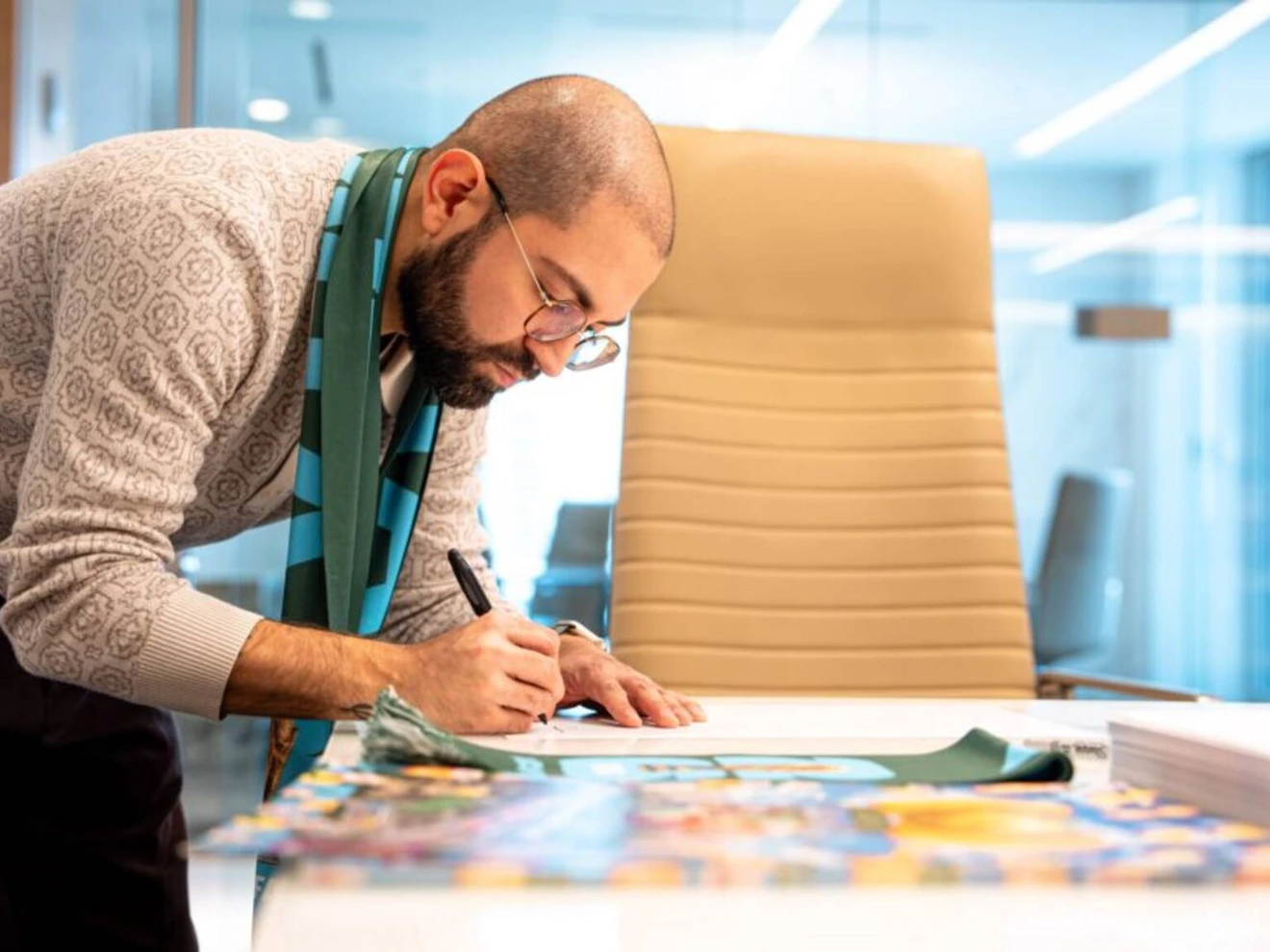
The SCAD alum brings Atlanta's FIFA World Cup™ vision to life. Photo Courtesy Of SCAD
Hadathy also names his grandfather, renowned Ecuadorian artist Bolivar Mena Franco, as his biggest influence. With this opportunity, he is continuing an honorable family legacy.
“I was lucky enough to grow up surrounded by his artwork, and that taught me that art can be used for more than showing pretty pictures. Art can be a vehicle to communicate ideas and emotions, or to tell stories,” he says. “In the early 1900s, he was part of the movement that prioritized depicting working-class people over the elite, as was the norm in the art world. In his case, he recognized that Ecuadorian indigenous people were being treated unfairly by society, and he used his art to portray them as heroes in beautiful, colorful paintings. I learned through him that art can be a language of its own.”
Like art, soccer is also transcendent. One of Hadathy’s fondest childhood memories growing up in Ecuador was when the country qualified for its first-ever tournament in 2001. “I remember how united the country felt. Everywhere you looked, people wore our iconic yellow jersey. I realized that even during political or societal turmoil, soccer has the power to bring people together,” he says.
He continues: “2026 feels very similar to how I felt back then. When life feels crazier than ever, soccer is giving us the opportunity to show each other that we are capable of uniting. For me, getting to be a small part of that is something I will never forget.”
As Atlanta prepares to welcome international soccer fans, Hadathy’s poster is proof that sometimes the most powerful stories are the ones rooted closest to home.